 | ||
 | | |
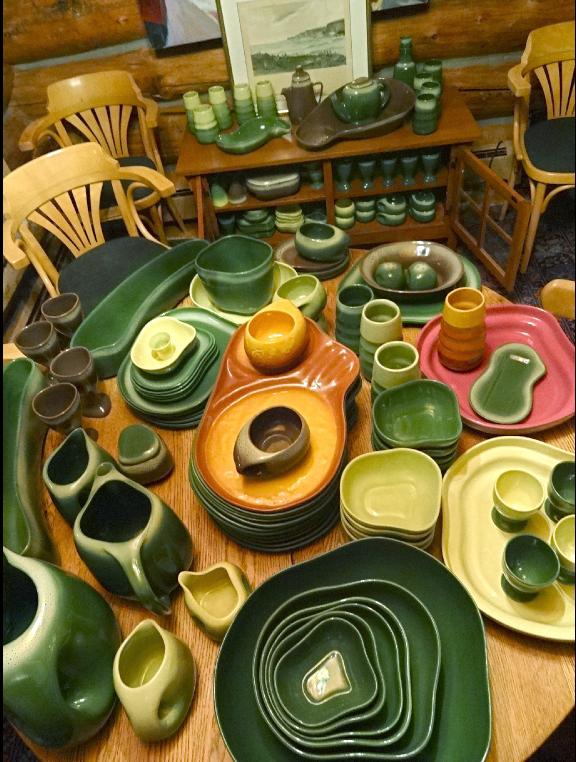
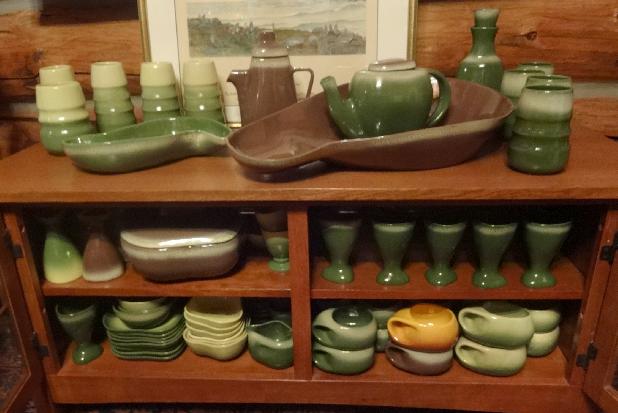
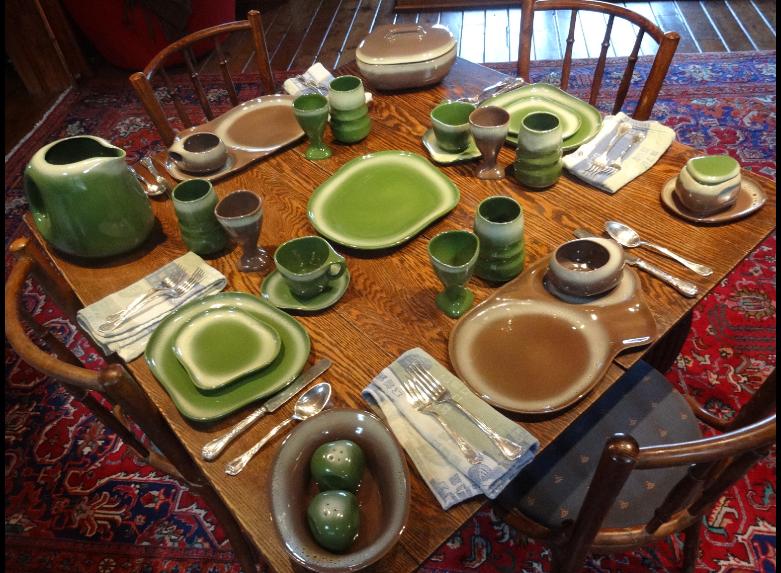
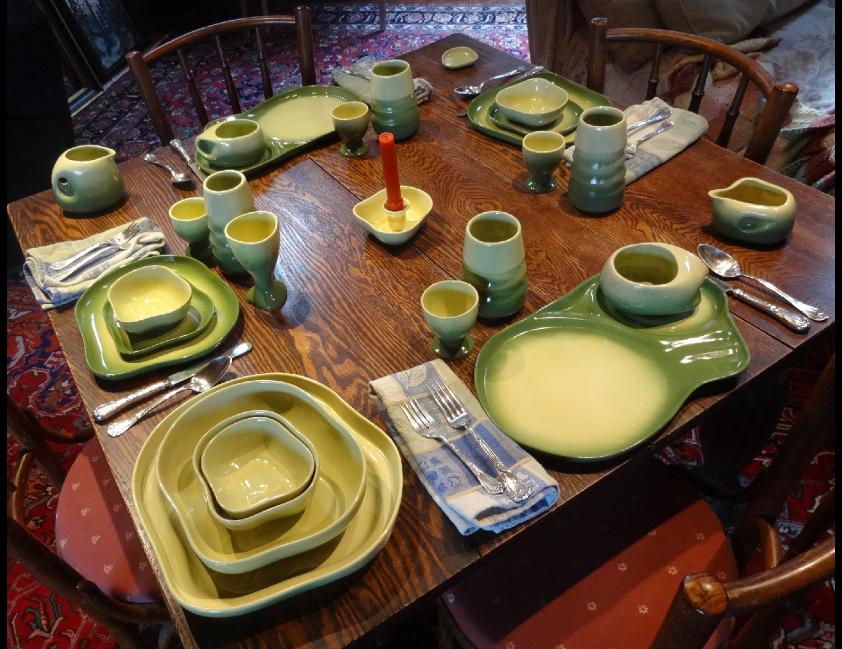
Page 1: Various pieces from my large Tamac Pottery collection, a masterpiece line of mid century modern tableware crafted in Perry. Oklahoma. Page 2: Rarities, history, links, and other great collections.
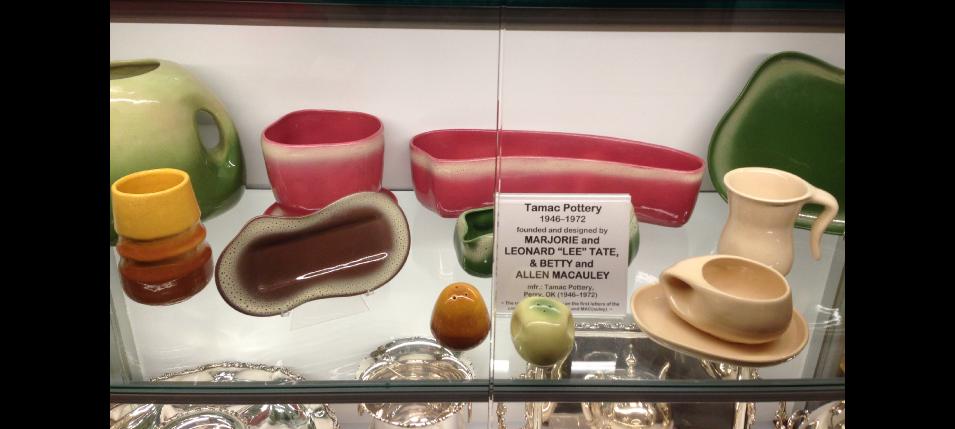
Tamac can be found in the collections of the Indianapolis Museum of Art, The Vance Kirkland Museum, The Brooklyn Museum, The Dallas Museum of Art, and The Boston Museum of Fine Art. Because Tamac Pottery did not have much distrubution on the coasts, it's been overlooked by MCM collectors who simply just don't know about it or its charms. Last update: 11/25. Pronounced Tah-Mac, according to daughter of the one of the firm's two founding couples, the Tates. | ||
| | |
 | ||
| | |
 | ||
| | |
 | ||
| | |
 | ||||
 | ||||
| | | | |
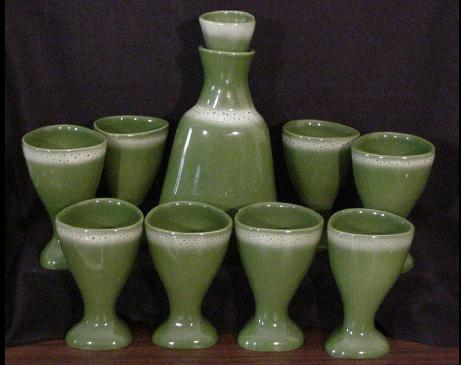
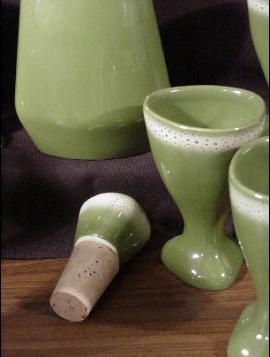
One of the great design features of this decantur is that the top of the cork stopper is hollow and serves as a shot glass. | ||
| | |
 |  | |||||
 | ||||||
| | | | | | |
 | ||
| | |
 | ||||
 | ||||
| | | | |
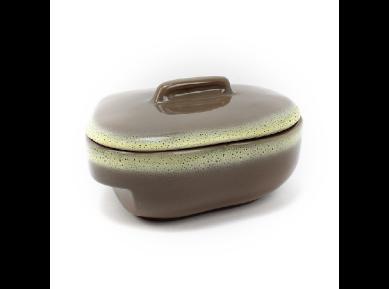
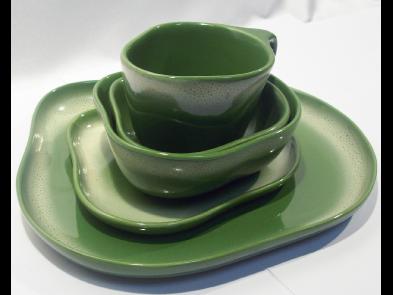
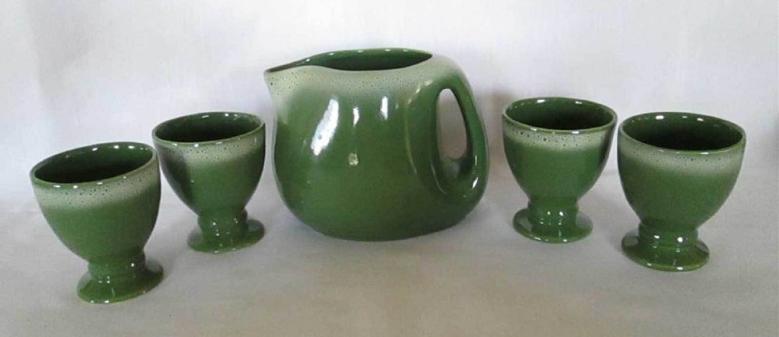
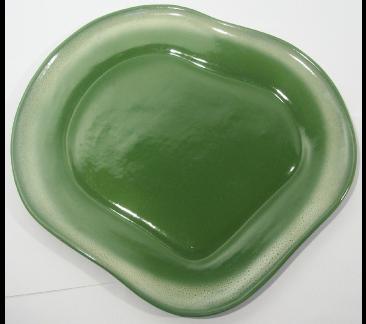
One of the things that makes Tamac really stand out from other mid-century modern tableware is its heavy, solid and handmade feel. Most other designs and patterns from the period feel light, and to me cheap, like CorningWare or the lowest end dishes from a discount store, despite their wonderful shapes and colors. Patterns by Ben Siebel, Russel Wright or Eva Zeisel look appealing but have that lightweight feel of the material that really turns me off. Those pieces don't have the heft of Tamac or other companies I like such as Fiesta or some Franciscan. Tamac looks and feels substantial. The glazes are generous, thick and heavy and each piece is unique. Although it is called Tamac Pottery, later pieces are really china and are quite durable. | ||
| | |
 | ||
| | |
 | ||||
 | ||||
| | | | |
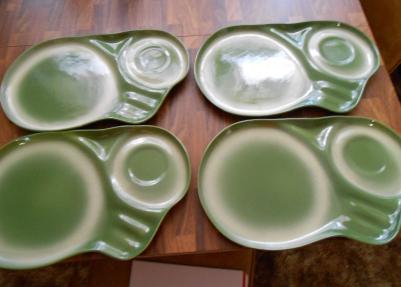
BBQ plates were made in all colors except perhaps raspberry. I have avocado, butterscotch, frosty pine and frosty fudge. I've seen honey. | ||
| | |
 | |||||||||||||||||
 | |||||||||||||||||
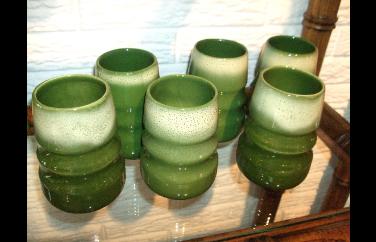
Most common, 2 ring tumbler in frosty pine. You can see the variation in glazes and size. Even more so with avocado. | |||||||||||||||||
 | |||||||||||||||||
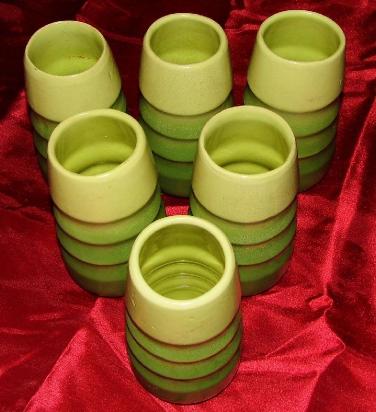 | |||||||||||||||||
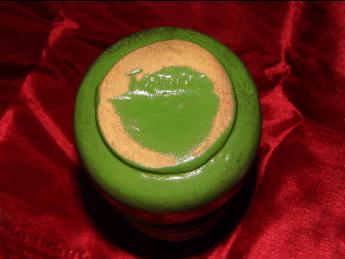
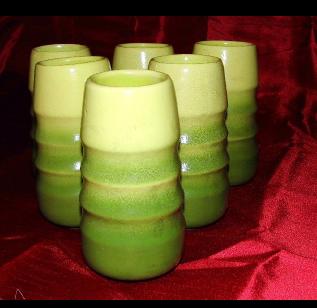
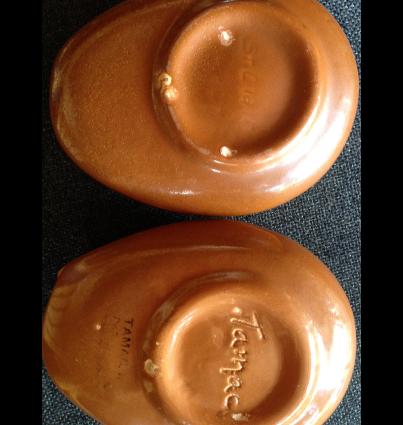
Large, early 3 ring tumblers, I have some in butterscotch too. They are hand signed, not stamped. | |||||||||||||||||
 | |||||||||||||||||
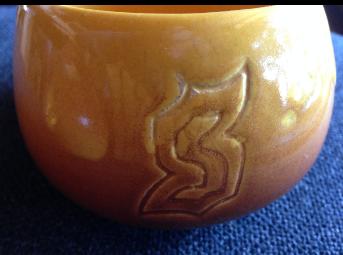 | |||||||||||||||||
One of my butterscotch BBC cups is incized with an 's' and signed St. Clair 1947. It is thought to have been made by Native American Oklahoma artist Saint Clair Homer who also worked at Frankoma or his son of the same name, also an artist. The other cup is both hand signed Tamac and stamped | |||||||||||||||||
| | | | | | | | | | | | | | | | | |
 | ||
| | |
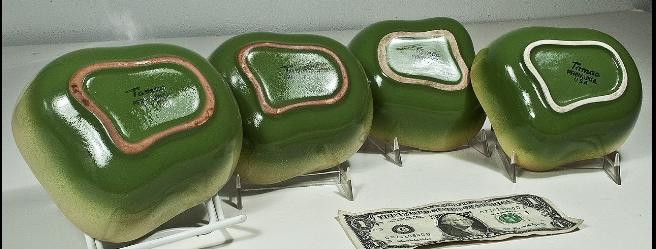
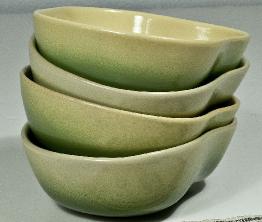
Different clay bodies on avocado soup bowls, red clay and whte porcelin. Avocado is prone to light crazing. Easy and safe to clean up the crazing by soaking in hydrogen peroxide overnight and drying in the sun. Never use bleach, it will make the piece unstable. Local red clay was replaced later by clays from Tennessee and Georgia. | ||
| | |
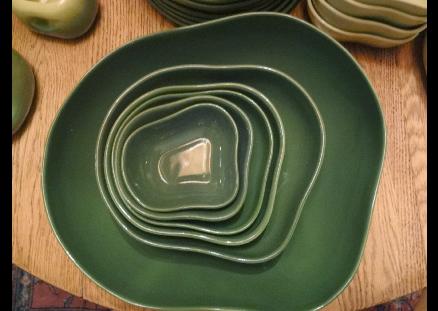 | ||||
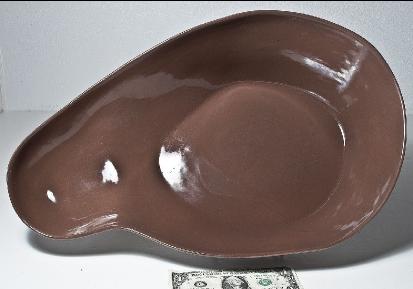
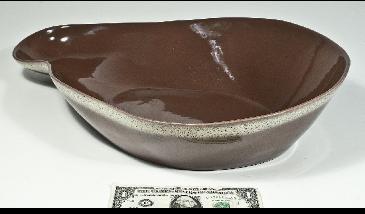
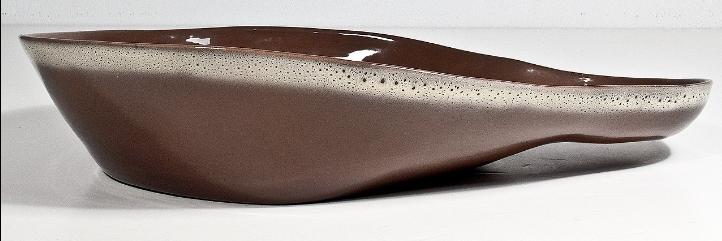
Tamac looks really neat with its biomorphic shapes, but it is best appreciated in person. The pieces fit so well in your hand, once you hold it, you'll wonder why all dishes are not made that way. It is really shocking to discover. I remember the first time I used a Tamac bowl, how easy and natural it was to hold. But then when I went to drink the remaining portion and found that the shape formed a spout to guide the last drops right perfectly to the lips I realized it was not just visual but wonderfully ergonomic in its design. Something you have to try to fully understand.
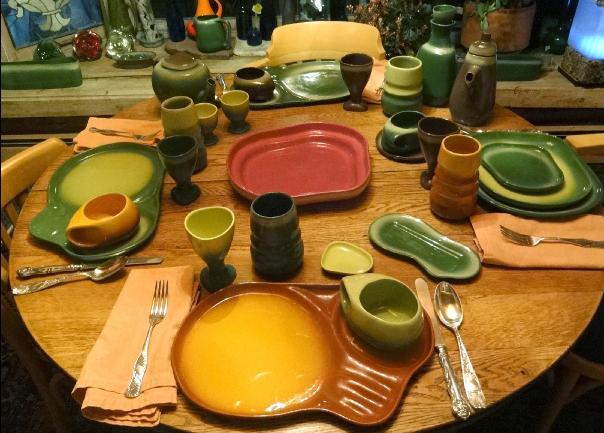
Unlike the pictures posted here, I rarely set an all Tamac table, I prefer to mix with different pieces. Tamac and Fiestaware make a stunning combination. | ||||
| | | | |
 | ||
| | |
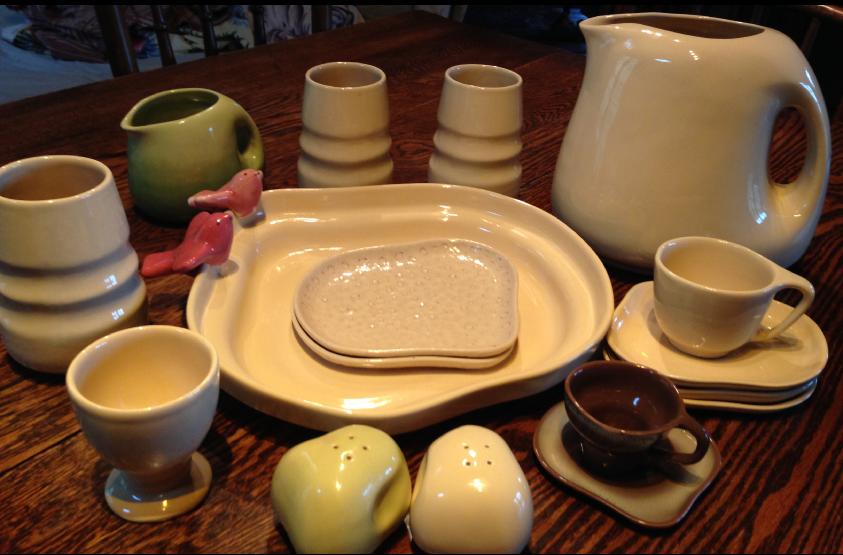
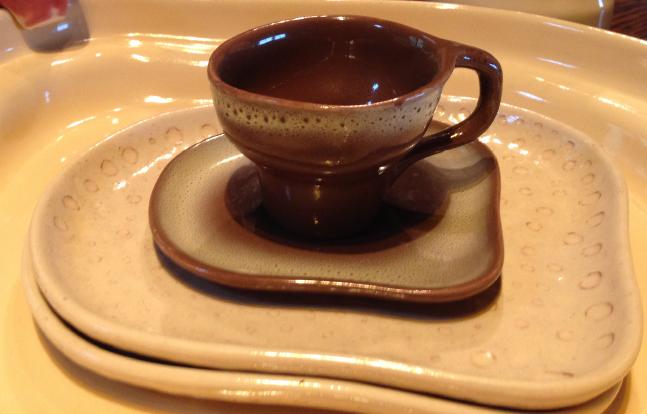
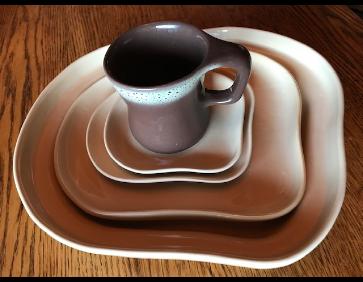
Honey and Avacado glazes. Honey was the last glaze to be introduced. Note the salad plates have a bubbly variation of the glaze that is quite rare. Also pictured are the teacup, a frosty fudge demi tasse, an early small cream pitcher in avocado and some raspberry rim sitters (birds). Avocado and Honey combine to make a nice salt and pepper set. Below: Frosty Fudge Demi Tasse and Large Coffee Cup Variation. I can think of 4 regular coffee cup variations not counting BBQ cups. | ||
| | |
 | ||||
 | ||||
| | | | |
 | ||
| | |
 | ||
| | |
 | ||||||
I needed some dishes to match a few sets of 50's silverware I had. Didn't find anything I really liked until Tamac, but the funny thing is, I end up using silverware from different eras with it after all. Oh well. | ||||||
 | ||||||
| | | | | | |
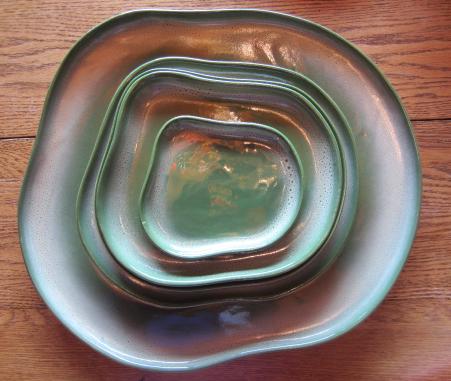
5 plates: chop platter, platter (under casserole dish), dinner plate, breakfast plate, salad plate. | ||||
The classic hot milk fix really works with Tamac clay to seal cracked vessels. I have 2 cracked pieces that do not leak after the process. | ||||
| | | | |
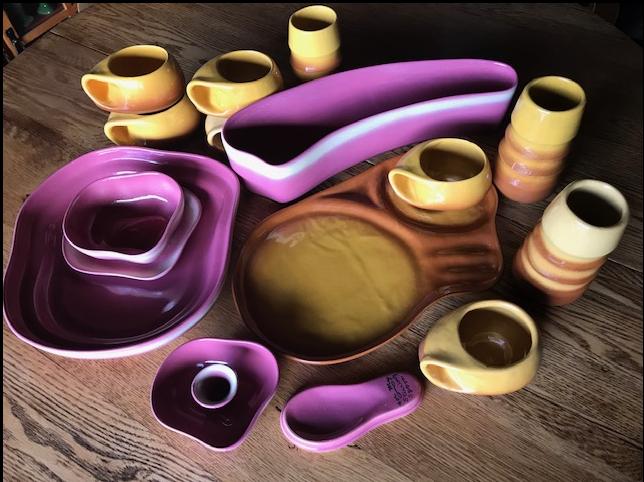 | ||||
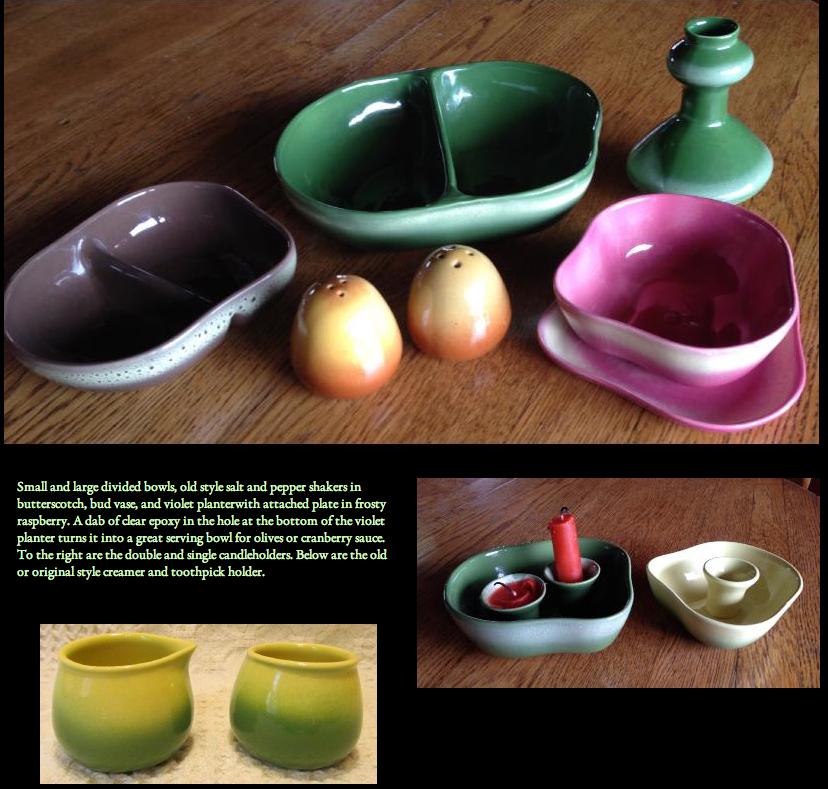
Butterscotch and Raspberry! Raspberry was only used on limited items, mostly servers and planters. | ||||
| | | | |
 | ||
| | |
 | ||
| | |
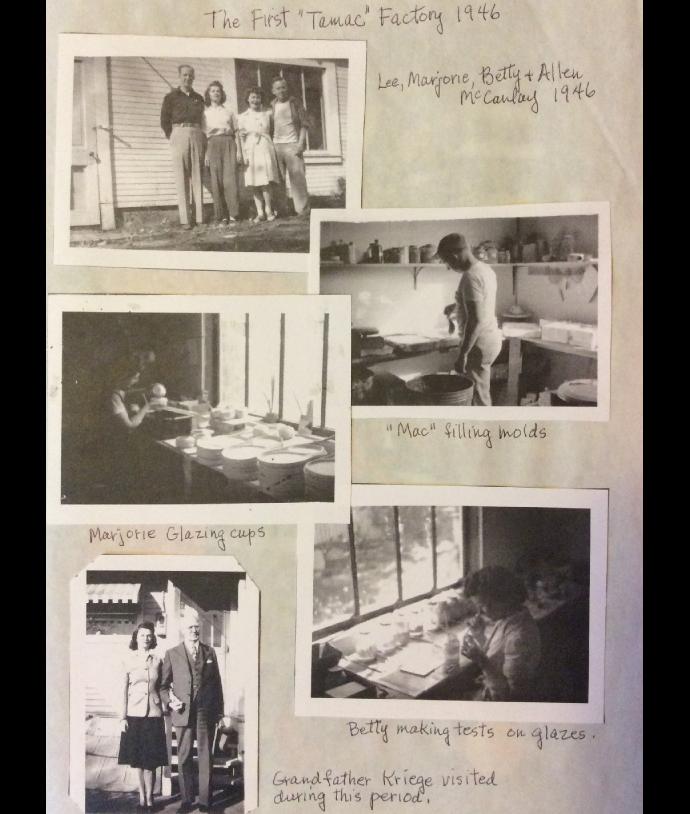
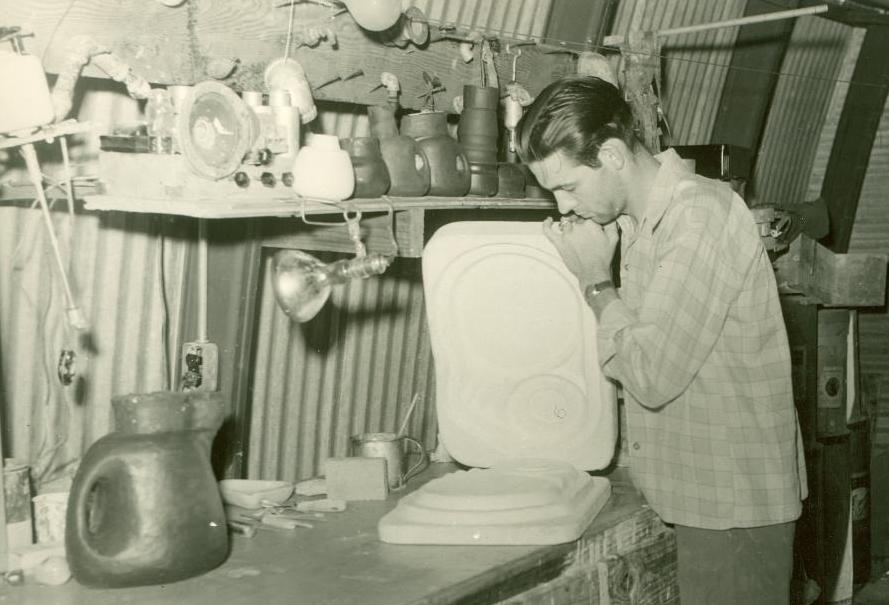
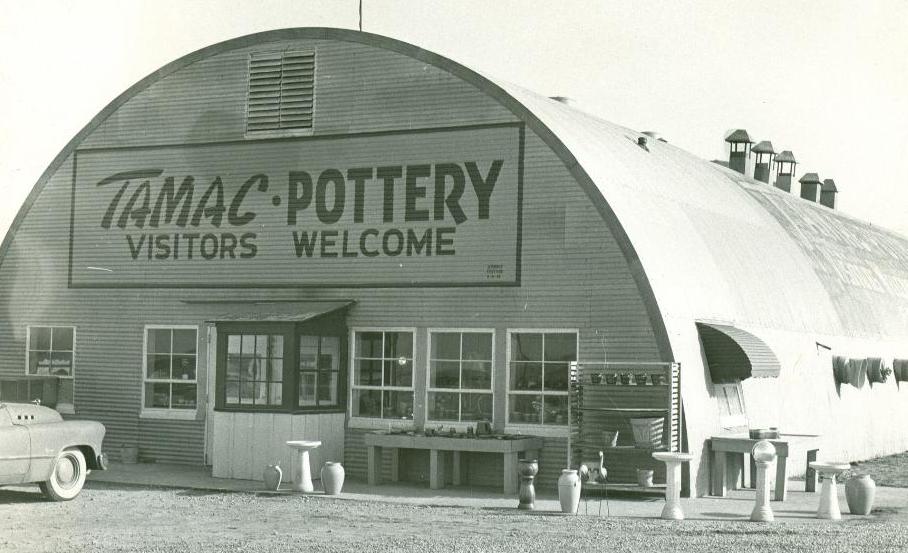
Pictures of the early days of Tamac shared with me and permission granted to publish online here by the daughters of one of Tamac's founding couples, the Tates. I was thrilled to hear from them and see these images. Many articles about them and the founding of Tamac can be found on other sites online such as this, and on page 2. | ||
| | |
 | ||
| | |
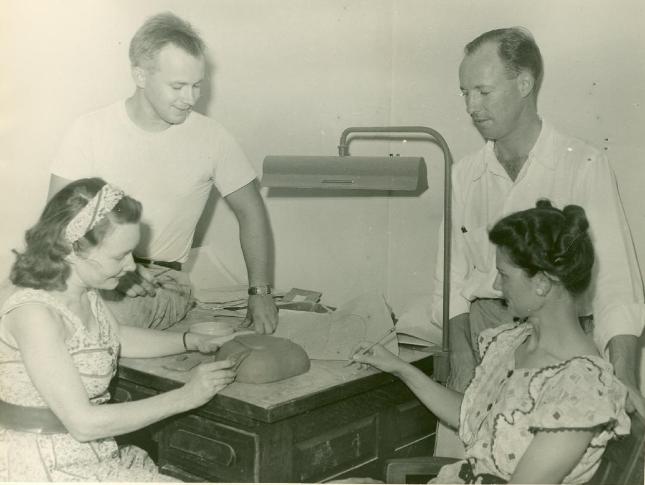 | ||||
TAMAC Founders The Macaulays (Allen, Betty) left The Tates (Marjorie, Lee) right
Note the correct spelling of Macaulay. Frequently misspelled elsewhere - 4 variations of the name appear! Allen T Macaulay is printed and signed on the US Patent for the BBQ cup in 1949 and in his obituary. See Tamac history on Page 2. | ||||
| | | | |
 | ||
| | |
 | ||
| | |
Tamac Display at the Vance Kirkland Museum in Colorado. | ||
| | |
Heaps more from other collectors on Page 2! | ||
| | |
| ||||||
| ||||||
| ||||||
| | | | | | |



 | ||
| | |
 | ||
| | |
 | ||||
 | ||||
| | | | |